
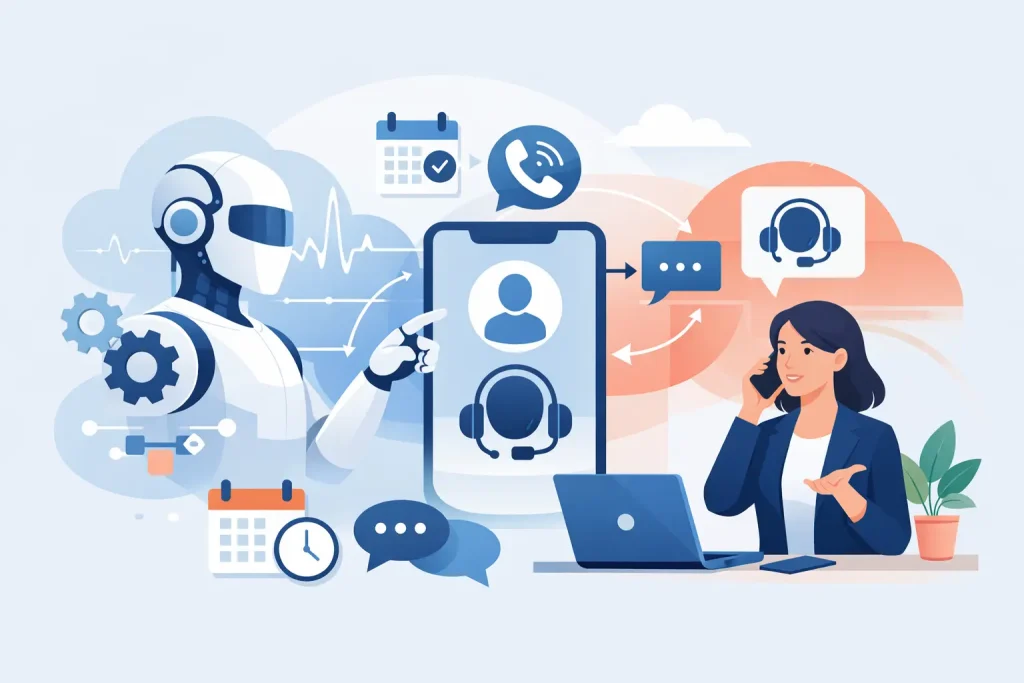
A lead submits a form at 8:47 p.m. They are comparing three providers, have a question about pricing, and are ready to talk. If your business replies the next morning, the lead may already be booked elsewhere. AI automation services exist to prevent that expensive gap between interest and action.
For service businesses, the issue is rarely just lead volume. Spas, home service companies, consultants, counseling practices, and B2B providers often lose revenue after the click. Leads wait too long for a reply, inquiries sit in an inbox, follow-up depends on someone remembering, and booking becomes a back-and-forth task. A connected automation system turns those weak points into a repeatable process that responds, qualifies, nurtures, and drives the next best action.
What AI Automation Services Actually Do
AI automation is not a chatbot pasted onto a website. Done properly, it connects the full path from acquisition to booked appointment. That means paid ads or organic content bring in the right audience, a landing page captures intent, the CRM records every interaction, and automated workflows keep the conversation moving.
An AI agent can handle the first response through website chat, SMS, email, or social messaging. It can answer common questions, ask qualification questions, explain the next step, and offer an available appointment time. When a prospect needs a human conversation or has a complex request, the system can notify your team with the context already collected.
The goal is not to make your business sound robotic. The goal is to make sure every serious inquiry receives a fast, relevant response while your team focuses on consultations, service delivery, and high-value sales conversations.
For example, a med spa lead may ask about treatment availability and pricing ranges. A home services prospect may need help for an urgent repair. A B2B prospect may want to know whether your offer fits their team size. The questions differ, but the operating principle is the same: respond immediately, gather the right information, and guide qualified people toward a booking.
Where Revenue Leaks Before the Sales Call
Most businesses do not have one big conversion problem. They have several small operational gaps that compound. An ad campaign can generate interest, but the lead is sent to a generic contact form. A receptionist replies during business hours, but not evenings or weekends. A salesperson makes one call, then the follow-up stops. The business assumes the lead was not interested when, in reality, the process made it difficult to continue.
AI automation services close those gaps by creating a defined sequence. The sequence might begin with an instant text after a form submission, followed by an AI-led qualification conversation. If the person is a fit, they receive a calendar link or are routed to the right team member. If they are not ready to book, a timed email and SMS nurture sequence keeps the business visible without manual chasing.
Speed-to-lead matters because intent fades quickly. But speed alone is not enough. A fast generic message can still feel impersonal. The strongest systems use the lead source, stated need, service interest, location, and past behavior to make the next message more useful. That balance between automation and relevance is where performance improves.
The System Behind More Qualified Appointments
A dependable lead-to-booked-call system has several connected parts. Each part supports the next, so a problem in one stage does not quietly damage the entire pipeline.
Acquisition and landing pages
Ads on Meta or Google can produce strong results when the offer, audience, and landing page match. Sending traffic to a homepage usually creates friction because visitors must figure out where to go and what to do. A conversion-focused landing page gives them one clear action: request a quote, claim an offer, schedule a consultation, or check availability.
The page should also set expectations. If you need certain budget levels, service areas, or appointment types, it is better to qualify for them early than fill the calendar with poor-fit calls.
CRM pipelines that show what is happening
A CRM pipeline should not be a database where leads go to disappear. It should show whether a contact is new, engaged, qualified, booked, unresponsive, won, or lost. Every lead needs an owner, a status, and a next step.
Platforms such as GoHighLevel make it possible to centralize forms, calendars, messaging, opportunities, and workflows. The technology matters, but the pipeline design matters more. A counseling practice may need a different process from a roofing company, and a B2B agency should not use the same qualification path as a beauty salon.
AI-led conversations and follow-up
An AI agent can respond in seconds, but it needs clear instructions. It should understand your services, boundaries, tone, common objections, qualification criteria, and handoff rules. It should never invent pricing, clinical guidance, availability, or guarantees.
This is particularly important in sensitive sectors such as EMDR, PTSD support, wellness, and counseling. Automation can help a prospective client receive a timely, respectful response and schedule an appropriate consultation. It cannot replace professional judgment, crisis support, or required privacy and compliance procedures.
For more straightforward service inquiries, the agent can reduce the load on your team substantially. It can answer whether you serve a location, collect job details, follow up after a missed call, and remind prospects to complete their booking. Human staff can step in when the conversation calls for empathy, expertise, negotiation, or a custom proposal.
Booking, reminders, and reactivation
Getting a booking is not the end of the workflow. Appointment reminders lower no-show rates, while pre-call questions help your team prepare. If someone cancels, the system should offer an easy way to reschedule. If a lead goes quiet after showing interest, a thoughtful reactivation sequence can bring them back weeks or months later.
This is where many businesses recover revenue without increasing ad spend. Their existing leads have not disappeared. They simply have not received consistent, useful follow-up.
What to Automate and What to Keep Human
The right answer depends on your sales cycle and the stakes of the decision. Automate repetitive, time-sensitive steps: initial acknowledgment, common question handling, lead routing, reminders, basic qualification, follow-up sequences, and pipeline updates. These are tasks where consistency creates value.
Keep people involved when nuance has a direct effect on trust or deal size. Complex estimates, clinical discussions, complaint resolution, strategic B2B discovery, and final negotiations usually benefit from a human owner. Automation should prepare those conversations, not flatten them.
There is also a practical trade-off around message volume. More follow-up can create more bookings, but excessive texting or generic email can damage trust. A good system uses sensible timing, clear opt-in practices, useful content, and stop rules when a person responds, books, or opts out.
How to Judge an AI Automation Partner
Do not choose a provider simply because they can install software or generate an AI chatbot. Ask how they will map your current lead journey, define a qualified lead, build your pipeline, train the agent, and measure results. The best implementation starts with your offer and sales process, not a prebuilt template forced onto your business.
You should also know who owns the day-to-day optimization. Campaigns, conversations, and booking rates produce signals that need review. If leads are responding but not booking, the offer or calendar flow may need adjustment. If leads are booking but not showing, reminders and pre-call positioning may need work. If the pipeline is full of poor-fit inquiries, targeting or qualification needs to change.
At FZFunnel, that is the difference between connecting tools and building an operating system for revenue. The work is designed around the full customer journey, from ad click and landing page conversion to AI follow-up and a qualified call on the calendar.
Measure the Numbers That Reveal the Bottleneck
Traffic and impressions are useful, but they do not tell you whether the system is creating sales opportunities. Track lead response time, contact rate, qualification rate, booking rate, show rate, close rate, cost per booked call, and revenue by source.
These metrics make decisions clearer. A low contact rate may point to slow follow-up or bad contact data. A low booking rate can signal weak messaging, unclear offers, or too much calendar friction. A low show rate often means reminders, commitment questions, or pre-call education need attention. You do not need to guess when the funnel tells you where prospects are dropping off.
The businesses that win with automation do not try to remove people from the customer experience. They remove delay, inconsistency, and manual busywork from the moments when a prospect is ready to move. Start with the handoff that currently loses the most leads, build a process your team can trust, and let every inquiry receive the attention it deserves.