
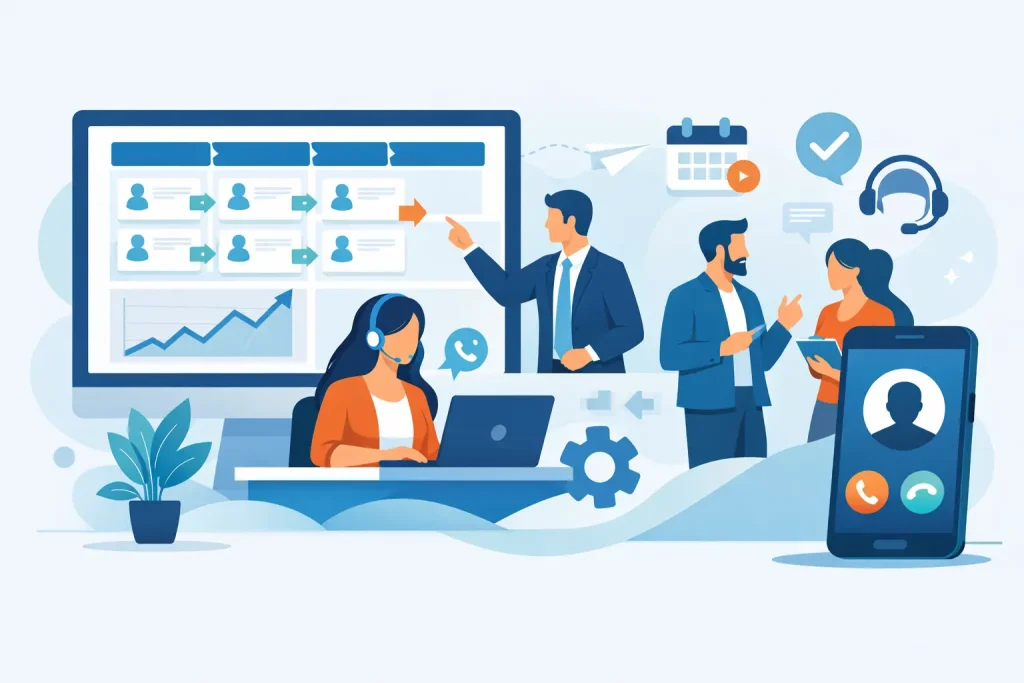
A lead submits a form at 9:14 a.m., gets no reply until the next day, and books with the business that answered first. That is not an advertising problem. It is a process problem. A CRM pipeline setup service gives every lead a clear path from first inquiry to qualified sales call, with the right follow-up happening before interest disappears.
For service businesses, the pipeline is where revenue is protected or lost. Spas, wellness practices, home service companies, consultants, and B2B teams may be generating leads, but lead volume means little when inquiries sit in inboxes, sales staff work from memory, and no one knows which prospects need attention today.
What a CRM Pipeline Setup Service Should Build
A CRM should not be a digital filing cabinet full of contacts. It should tell your team what is happening with each opportunity, what needs to happen next, and what automation can handle without waiting for a person to step in.
A properly built pipeline starts with your actual customer journey. A homeowner requesting a quote needs a different path than a counseling prospect booking a consultation or a salon client responding to a reactivation offer. The stages, questions, messaging, and handoff rules should reflect how your business sells, not a generic template copied from another industry.
For most appointment-based and high-ticket service businesses, the journey begins with a new lead and moves through contact, qualification, booking, attendance, proposal or sale, and follow-up. The names can change, but every stage needs a clear definition. If a lead is marked as “Contacted,” your team should know whether that means an automated text was sent, a real conversation happened, or a call attempt was made. Ambiguous stages create reporting that looks organized but cannot guide decisions.
The setup also needs ownership. Every active lead should have a responsible person, even if an AI agent and automated workflows handle the first response. Automation can respond instantly, answer common questions, collect basic qualification details, and offer times on your calendar. Your team should know exactly when to take over for a nuanced question, a high-value opportunity, or a prospect who is ready to buy.
Start With the Revenue Process, Not the Software
Many businesses choose a CRM first and then force their sales process into whatever fields and stages the platform provides. That approach is fast at the beginning and expensive later. The better approach is to map the operating process before building automations.
Ask where leads come from, what they expect after submitting an inquiry, how quickly they need a response, and what information determines whether they are a fit. Then identify the moment that counts as a conversion. For some businesses, it is a booked consultation. For others, it is a completed estimate request, a paid deposit, or a signed agreement.
This planning step exposes the gaps that create leakage. A lead from a Meta ad may receive a confirmation email but no text message. A person who books a call may get no reminder and fail to show up. A no-show may never receive a rescheduling message. A prospect who asks for pricing may be passed between team members with no record of the conversation.
Those gaps are not minor admin issues. They affect response rate, show rate, close rate, and the real return on every advertising dollar.
Define stages that drive action
A useful pipeline is short enough to manage and specific enough to report on. It should answer one practical question at each stage: what must happen next?
For example, a new inquiry may trigger an instant SMS and email response. Once a prospect replies, the record can move to an engaged stage and prompt an AI agent or team member to qualify them. When they select a time, the system moves them to booked and starts reminder workflows. If they do not attend, the lead moves to a no-show stage with a separate rescheduling sequence.
The trade-off is simplicity versus detail. A pipeline with too few stages hides important problems. A pipeline with 15 stages becomes difficult for the team to maintain. Most businesses need enough visibility to diagnose drop-off points without turning every conversation into a data-entry task.
Build Speed-to-Lead Into Every Entry Point
The first few minutes after a lead submits an inquiry are critical. Interest is highest when someone has just clicked an ad, visited a landing page, or asked for information. If your business relies on staff to notice every new lead and send a manual reply, your response time will vary based on meetings, weekends, workload, and human error.
A connected CRM setup routes leads directly from landing pages, forms, ads, website chat, and inbound messages into one system. The lead is tagged by source, assigned correctly, and receives an immediate response that matches the offer they requested.
That response should feel helpful, not automated for the sake of automation. For a local home service company, it may confirm the service area and ask for a preferred appointment time. For a beauty clinic, it may address the treatment requested and guide the lead toward a consultation. For a B2B consultancy, it may ask a few questions that separate serious opportunities from general research.
SMS is especially useful when it is paired with email instead of treated as a replacement for it. Text messages create faster conversations, while email gives you room to share details, proof, preparation instructions, or a follow-up recap. The right mix depends on your market, consent process, and sales cycle. High-consideration services often need more nurture than an urgent repair request.
Use Automation to Qualify, Nurture, and Escalate
The goal is not to automate every customer interaction. The goal is to remove the delays and repetitive tasks that stop good leads from reaching a real conversation.
An AI agent can handle the first layer of communication by responding to common questions, collecting service needs, checking location or budget criteria, and presenting available booking times. When a lead meets your requirements or asks something more complex, the conversation can be escalated to the right person with the context already recorded.
This creates a better experience for both sides. Prospects do not have to repeat themselves, and your team does not spend the day chasing incomplete inquiries. It also makes follow-up consistent. If a lead goes quiet after asking about availability, the CRM can send a timely check-in. If a consultation is booked, reminders can go out by text and email. If the appointment is completed but no decision is made, the system can begin a tailored post-call sequence.
The messaging needs restraint. Too many reminders can feel pushy, particularly in wellness, counseling, and personal care services where trust matters. The sequence should reflect the buying decision. A fast-response campaign for emergency plumbing will look very different from a gentle consultation follow-up for EMDR or a multi-week nurture process for a premium B2B service.
Make Booking and Sales Handoff Measurable
A booked call is a strong result, but it is not the final metric. Your pipeline should show whether booked calls are attended, whether qualified appointments convert, and where prospects stop moving forward.
Calendar booking should be connected to the CRM, not managed separately in a personal calendar with no visibility for the team. When a prospect books, the opportunity should update automatically, confirmation details should be sent, and reminders should be scheduled. If the prospect cancels, reschedules, or misses the appointment, the pipeline should reflect that immediately.
After the call, sales staff need a simple way to record the outcome. Did the lead qualify? Was a proposal sent? Is there a decision date? Was the opportunity won, lost, or placed into long-term nurture? These details make future follow-up more relevant and make reporting more honest.
Without this structure, businesses often celebrate lead volume while ignoring the costly middle of the funnel. They know how many forms came in but cannot tell which channel produced show-ups, customers, or revenue.
What to Expect From a Custom CRM Pipeline Setup
A generic CRM installation may give you stages and a few automated messages. A custom setup should connect the entire lead-to-booked-call process: acquisition source tracking, landing page or form capture, instant response, qualification logic, SMS and email nurture, appointment booking, sales notifications, and reporting.
It should also account for how your team works. A solo consultant may need a low-maintenance system that protects leads while they serve clients. A multi-location salon may need routing by service, location, or staff availability. A growing home service team may need clear assignment rules so no inquiry is claimed twice or missed entirely.
That is why implementation should include testing, adjustment, and visibility. At FZFunnel, the focus is not on handing over software and hoping the team adopts it. It is on building a connected operating system around the offer, audience, and sales process, then making sure every part works before leads are sent into it.
The right CRM pipeline does more than organize contacts. It gives your business a dependable way to respond while interest is high, keep conversations moving, and put qualified prospects on the calendar. When every lead has a next step, growth stops depending on who happened to check their phone first.