
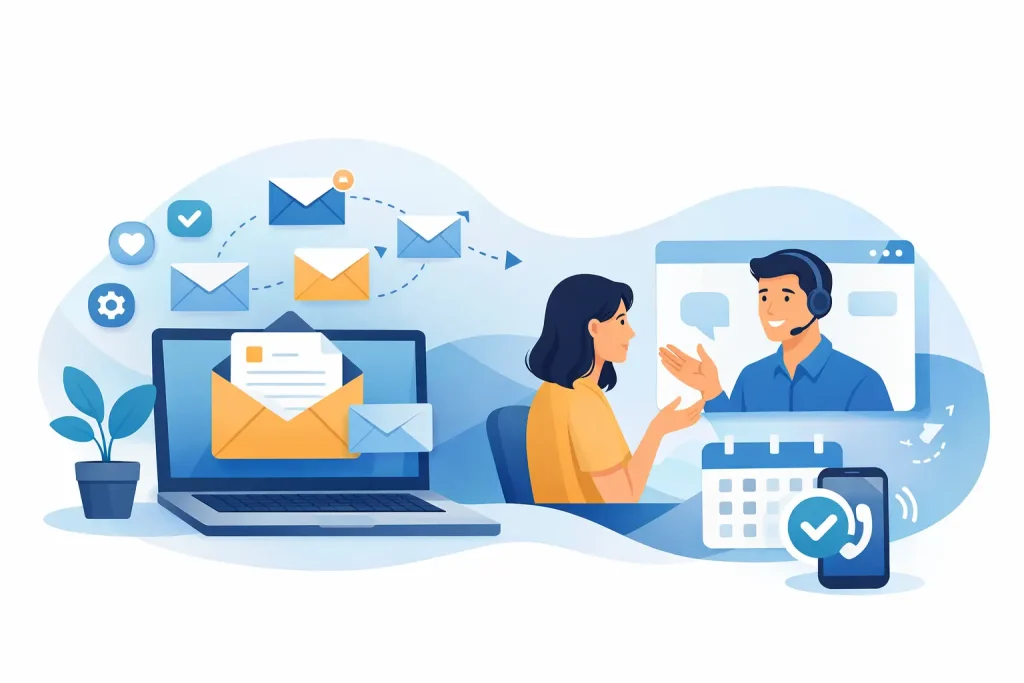
A lead who requests a quote at 9:15 a.m. and hears back three days later is rarely a lead anymore. They have called another provider, compared options, or simply moved on. An email nurture sequence service closes that gap by giving every prospect a relevant reason to keep moving toward a conversation with your business.
For service businesses, the goal is not to send more emails for the sake of it. The goal is to create dependable follow-up between the first inquiry and the booked call, consultation, estimate, or appointment. That means responding quickly, answering the questions that create hesitation, and making the next step obvious before interest goes cold.
Why most leads do not book on the first visit
A homeowner looking for a landscaping estimate may submit a form while comparing three companies. A counseling prospect may need reassurance before scheduling an initial consultation. A salon customer might be interested in a treatment but waiting for the right offer, date, or level of confidence.
None of these people necessarily need more pressure. They need clear information at the right time. Yet many businesses rely on a single confirmation email, a manual follow-up when staff has time, and occasional promotional campaigns sent to everyone on the list. That approach leaves revenue sitting in the CRM.
A well-built nurture sequence recognizes that lead intent changes quickly. It starts with an immediate acknowledgment, then continues with messages designed around what the prospect needs to know next. The sequence can educate, qualify, overcome objections, share proof, and bring the prospect back to the calendar without requiring your team to chase every inquiry manually.
What an email nurture sequence service should actually do
Email automation is easy to oversimplify. Setting up a few messages inside a platform is not the same as building a sequence that supports sales. The quality of the strategy matters because your audience, offer, sales cycle, and booking process determine what each message needs to accomplish.
For a high-ticket B2B consultant, the sequence may focus on the cost of delaying a solution, a relevant case example, and a clear invitation to book a strategy call. For a local home service business, it may reinforce response speed, service area, customer reviews, financing options, and how estimates work. For wellness, EMDR, PTSD, and counseling practices, the tone must be more measured, informative, and respectful of sensitive decisions.
A strong email nurture sequence service connects these details to an operating system. It should include:
- Lead-source segmentation, so a person who downloaded a guide is not treated like someone requesting a consultation.
- Immediate confirmation and expectation setting, so the lead knows what happens next.
- Behavior-based follow-up triggered by actions such as form submissions, calendar bookings, email opens, replies, or missed appointments.
- Sales-focused content that answers real objections and gives prospects a simple route to book.
- Reporting that shows where leads are engaging, stalling, and converting.
The difference is not just better copy. It is the connection between your ads, landing pages, CRM pipeline, appointment calendar, email follow-up, SMS reminders, and sales process.
The sequence starts before the first email
The most persuasive nurture email cannot fix a weak offer or a confusing landing page. If an ad promises a free consultation but the form asks for too much information, the problem begins before the lead enters your automation. If the calendar is difficult to use, the sequence may generate interest without producing appointments.
That is why FZFunnel treats follow-up as part of the full lead-to-booked-call system. The first message is informed by the ad someone clicked, the page they visited, and the action they took. A prospect who asks for a quote should receive a different path than someone who watches a video, downloads a resource, or abandons a booking page.
This context also protects your sales team from avoidable friction. Rather than receiving a vague notification that a lead came in, they can see the source, requested service, answers to qualification questions, prior messages, and engagement history. When they speak with the prospect, the conversation starts further ahead.
The messages that move a prospect toward a call
Every sequence needs a clear job. The first email should arrive almost immediately and confirm that the inquiry was received. It can set a response expectation, provide the booking link, and make the next step feel easy. For many businesses, this message alone improves conversion because it meets the prospect while they are still actively looking.
The next messages should not repeat the same call to action with different subject lines. They should reduce uncertainty. One may explain your process. Another may address a common concern about pricing, timing, results, or eligibility. Another can share a concise client outcome or explain what happens during the first call.
Social proof works best when it is specific to the decision being made. A tree-planting company can demonstrate reliability through completed project outcomes and communication standards. A beauty clinic can address treatment concerns with clear expectations and client experience. A B2B service provider can show the operational or revenue problem solved, not simply claim to be the best.
Then comes the booking push. This should be direct, but it should not feel disconnected from the value already provided. If the emails have helped the lead understand the problem and see a credible path forward, a calendar invitation is the natural next step.
Email works better when it is not working alone
Email remains one of the most effective ways to nurture leads, but inboxes are busy and some prospects prefer texting. For appointment-driven businesses, combining email with automated SMS often creates a stronger response pattern. Email provides the detail. SMS handles time-sensitive nudges, booking reminders, and short follow-ups that are easy to act on from a phone.
There is a trade-off. More channels do not automatically mean better results. Excessive messages can damage trust, especially for sensitive services or long consideration cycles. The right cadence depends on the urgency of the offer, the value of the appointment, and the level of consent the lead has given.
A missed-call text, for example, can be useful for an emergency home service inquiry. It would be inappropriate to use the same urgency for a counseling prospect who has requested information. Smart automation is not about maximum volume. It is about using the right message, channel, and timing for the situation.
Segmentation is where generic campaigns lose revenue
The biggest mistake in nurture is treating every lead as identical. A new lead from a paid Meta campaign may need basic education and trust-building. A referral may already trust you but need help choosing a service. A past customer may be ready for a related offer, maintenance plan, or follow-up appointment.
Segmentation lets the system respond to those differences. It can route high-intent leads to an immediate booking sequence, send unqualified inquiries to an educational path, and notify your team when a prospect repeatedly engages with key messages. It can also stop emails the moment someone books, preventing the awkward experience of receiving “book now” reminders after they have already scheduled.
This is also where a connected CRM becomes essential. Your pipeline should show whether a lead is new, contacted, booked, no-showed, won, or lost. Email automation should react to those stages rather than operating as a separate marketing activity with no awareness of what sales is doing.
How to measure whether nurture is producing revenue
Open rates can indicate whether subject lines are earning attention, but they do not tell you whether the sequence is working. A nurture system should be judged by business outcomes: speed to first response, reply rate, booking rate, show rate, qualified opportunity rate, and revenue from nurtured leads.
Review those numbers by source where possible. If Google Ads leads book at a higher rate than social leads, the answer may not be to cut social immediately. Social traffic may need a longer education sequence, while search leads may need faster appointment access. The data helps you improve the system instead of making decisions based on assumptions.
It also reveals operational issues. If people book but do not show up, reminder timing and confirmation messaging may need work. If many leads click but do not schedule, the offer, calendar availability, or call-to-action may be the real constraint.
Build follow-up that respects the lead and your team
The best nurture sequence feels organized from the prospect’s perspective and efficient from your team’s perspective. It gives people useful answers, makes booking simple, and alerts a human when a real conversation is needed. Behind the scenes, it removes repetitive tasks that should not depend on someone remembering to follow up after a long day.
Your leads are already telling you what they need through their source, behavior, questions, and timing. The opportunity is to build a system that listens, responds, and keeps the door open until the right prospect is ready to book.