
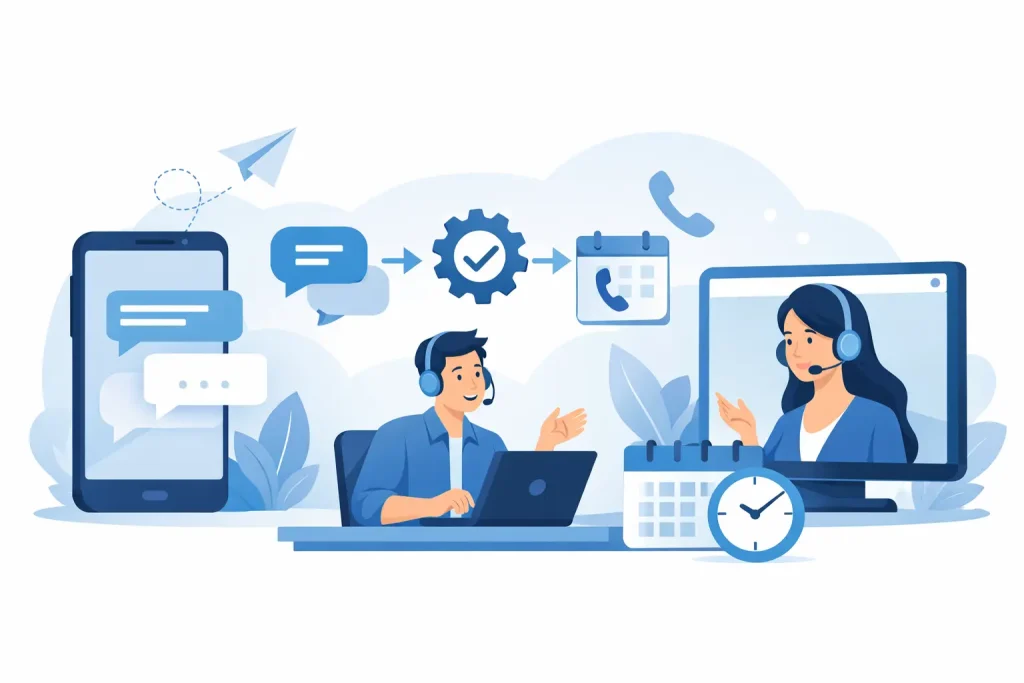
A lead fills out your form after seeing an ad, asks about availability, then goes quiet for 15 minutes. By the time someone replies, they may have contacted three competitors. An SMS follow-up automation service prevents that expensive gap by responding immediately, asking the right questions, and moving qualified prospects toward a booked call or appointment.
For a salon, that may mean turning a treatment inquiry into a confirmed consultation. For a home service business, it can mean qualifying a repair request before the team is back from a job. For consultants, counselors, and B2B providers, it means making sure every interested prospect receives a clear next step instead of being buried in an inbox.
The goal is not to send more texts for the sake of it. The goal is to build a dependable lead-to-booked-call process that protects the demand you have already paid to generate.
Why speed to lead changes the outcome
Most service businesses do not have a lead problem first. They have a follow-up consistency problem. Ads, referrals, social media, and landing pages create inquiries, but the owner is serving clients, managing staff, or handling delivery work. A message that should take 30 seconds to send gets delayed until the evening. Then another lead comes in, and the process becomes reactive.
SMS is useful because it meets prospects where they already pay attention. A short, relevant text is often easier to answer than an email and less intrusive than a phone call. When it arrives within moments of an inquiry, it confirms that the business is responsive and gives the prospect a simple action to take.
That does not mean every lead should receive the same generic text. A tree planting company and an EMDR practice have different qualification needs, buying cycles, and privacy considerations. Effective automation reflects the offer, the audience, and the questions your sales team needs answered before a booking.
What an SMS follow-up automation service should do
A real system is more than an automatic “Thanks for your inquiry” text. It connects your lead source, CRM, communication workflows, and calendar so each step has a purpose.
When a prospect submits a form, messages your business, or responds to an ad, the workflow should create or update their contact record immediately. It should identify the source of the lead, trigger an appropriate first response, and notify the right person when human attention is needed. If the prospect is ready, the system should direct them to the calendar. If they are interested but not ready, it should continue nurturing them without forcing your team to remember every follow-up.
A well-built SMS follow-up automation service typically handles the first response, qualification prompts, appointment reminders, missed-call text-back, no-show recovery, and reactivation of older leads. It can also coordinate with email follow-up, because some decisions need more explanation than a text message can provide.
The difference is context. A lead who requested a quote should not receive the same message as someone who booked a consultation but failed to show up. The automation should use pipeline stage, form answers, timing, and previous engagement to guide the next message.
Build the conversation around one clear action
The strongest SMS sequences do not try to close a high-value sale in five messages. They reduce friction and create momentum.
For example, a wellness clinic could send an immediate text confirming the inquiry and asking whether the prospect prefers weekday or weekend appointments. Once they reply, the system can provide available times or invite them to book directly. If they do not respond, a follow-up might address a common concern, such as what the consultation includes, before presenting the booking option again.
A home service company may need different information first: location, urgency, service type, and whether the prospect owns the property. A B2B consultant may need company size, a current challenge, or a preferred time for a strategy call. These questions are not administrative details. They help qualify demand and make the booked appointment more productive.
Keep each message focused. Ask one easy question, provide one useful detail, or offer one next step. Long paragraphs and multiple decisions create drop-off, especially on a mobile screen.
Automation needs a human handoff
Automation should make your business faster, not make it sound automated. Prospects can tell when a text ignores what they just said or keeps pushing a link after they have asked a direct question.
Set clear rules for handoff. If someone asks about a custom quote, mentions an urgent issue, raises a sensitive concern, or signals strong buying intent, notify a team member and assign the conversation. The CRM should show the full message history so that person can respond with context instead of asking the prospect to repeat themselves.
AI agents can help answer common questions, qualify leads, and route conversations outside business hours. But they need guardrails. They should not invent pricing, promise availability they cannot confirm, or handle situations that require clinical, legal, or specialist judgment. In counseling and wellness, for example, the workflow must prioritize appropriate boundaries and direct urgent situations to the correct resources rather than treating every message as a sales opportunity.
This is where custom implementation matters. A template can send texts. It cannot decide how your team should respond when a lead requests a same-day service, wants a specific provider, or has an objection that needs a real conversation.
The follow-up timeline should fit the buying cycle
There is no universal “best” SMS cadence. A same-day cleaning inquiry may need quick follow-up over a few hours. A high-ticket business service may require a longer sequence that combines text messages, email, retargeting, and personal outreach over several weeks.
The first response should be immediate. After that, frequency should depend on the prospect’s behavior. If they respond, the system should continue the conversation naturally. If they click a booking link but do not schedule, send a helpful nudge. If they book, stop sales messages and move them into confirmation and reminder workflows. If they do not show, follow up promptly with an easy rescheduling option.
Too little follow-up leaves revenue on the table. Too much follow-up can damage trust and cause opt-outs. The right balance comes from testing message timing, reviewing replies, and tracking whether booked calls actually turn into sales.
Measure revenue signals, not message volume
It is easy to celebrate delivery rates and replies. Those numbers matter, but they are not the finish line. A workflow that generates many replies but few qualified appointments may need better screening questions. A campaign with strong booking rates but poor show rates may need stronger confirmation and reminder messages.
Track the full path: lead source, speed to first response, contact rate, qualification rate, booking rate, show rate, close rate, and revenue per lead. This reveals where the system is doing its job and where the sales process needs attention.
For example, if leads from Google Ads book more often than leads from Meta, that does not automatically mean you should stop Meta ads. It may mean the Meta funnel needs a different offer, more education before booking, or better follow-up questions. Connected reporting turns assumptions into decisions.
Common mistakes that weaken SMS automation
The first mistake is treating every lead identically. Service type, location, budget range, urgency, and readiness should influence the conversation. The second is leaving automation disconnected from the CRM, which creates duplicate records, missed tasks, and no visibility into what happened before a prospect booked.
Another common problem is building a sequence once and never reviewing it. Offers change, teams change, and prospects reveal new objections over time. Review conversations regularly. Look for unanswered questions, confusing steps, unnecessary delays, and reasons people do not book.
Finally, do not overlook consent and compliance. Only message people who have opted in through appropriate channels, clearly identify your business, and provide a simple way to opt out. Rules can vary by location and industry, so the workflow should be configured for your operating requirements rather than copied blindly from another business.
Turn lead response into a dependable operating system
A strong follow-up system does more than save time. It gives owners confidence that inquiries are being handled while they are in appointments, with clients, or off the clock. It gives sales teams a cleaner pipeline and better context. Most importantly, it gives prospects a faster, more professional experience at the moment their interest is highest.
FZFunnel builds these workflows as part of a connected system: acquisition, landing pages, CRM pipelines, AI-assisted conversations, nurture, and calendar booking. That approach matters because a fast text only creates value when the next step is equally clear.
Start with the leaks you can already see: unanswered forms, missed calls, unbooked estimates, no-shows, and old leads that were never contacted again. Each one is an opportunity to create a more reliable path from interest to conversation – and from conversation to revenue.