
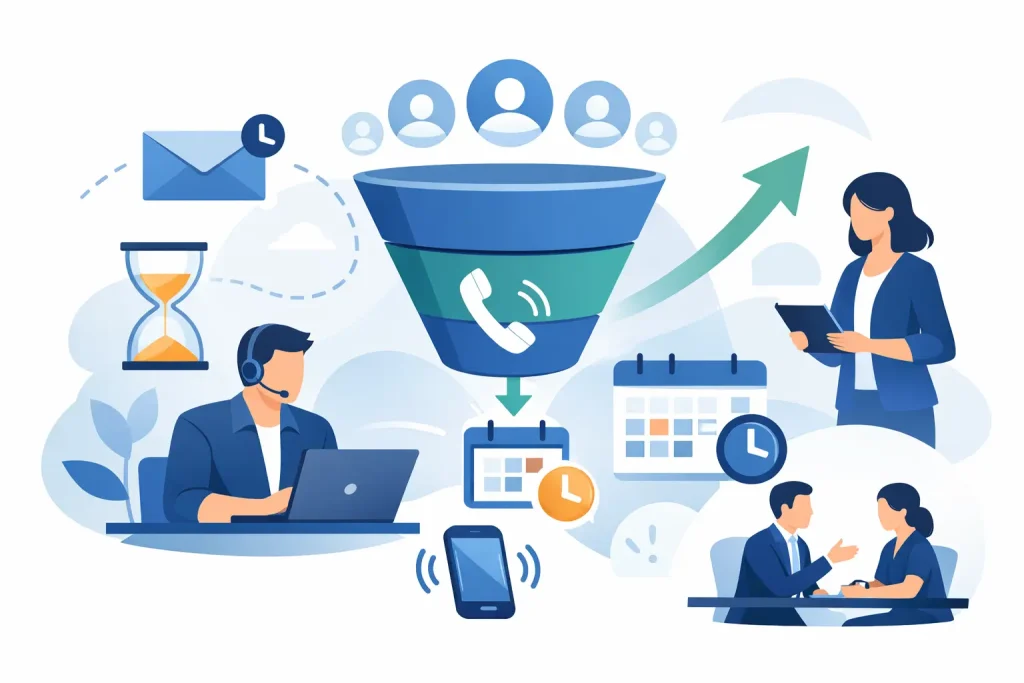
A prospect submits a form for a $2,000 treatment package, a roof estimate, or a business consultation at 9:12 a.m. By 9:30, they have already contacted two competitors. That is why businesses that reduce lead response time do not merely look more organized. They protect revenue that would otherwise disappear before a sales conversation even starts.
For service businesses, speed-to-lead is not about pressuring people into a decision. It is about being available at the exact moment a prospect has intent. The business that acknowledges the inquiry, answers the first question, and offers a clear next step earns an advantage before the sales call begins.
Why slow lead response costs more than one booking
A delayed reply creates three problems at once. First, the lead cools off. The urgency that made someone request a quote or consultation fades quickly when they receive no confirmation. Second, your team starts each conversation at a disadvantage because the prospect may already be comparing alternatives. Third, paid advertising becomes less efficient. You can generate more leads, but more volume will not fix a process that leaves inquiries waiting in an inbox.
This is especially expensive for businesses with high-consideration services. A wellness clinic may receive a sensitive inquiry after business hours. A home service company may get an urgent request while its field team is busy. A B2B consultant may receive a demo request while they are in back-to-back client meetings. None of those situations should require a prospect to wait until someone is free to send a basic response.
The goal is not necessarily to have a human salesperson take every call within 60 seconds. The goal is to make every qualified lead feel seen immediately, then move them intelligently toward the right next action.
How to reduce lead response time without hiring more staff
The strongest systems separate instant engagement from human intervention. Automation handles the first moments consistently, while your team steps in when a lead is qualified, has questions that require expertise, or is ready to speak.
That approach works because it removes the most common bottlenecks: missed notifications, unclear lead ownership, manual data entry, and the assumption that every inquiry should receive the same generic reply.
Start with an immediate confirmation
Every lead should receive a response within minutes, including evenings and weekends. A simple message can confirm that the request was received, set an expectation for the next step, and ask one useful qualifying question.
For example, a med spa inquiry could receive a text asking which treatment they are considering and whether they prefer a weekday or weekend appointment. A landscaping company could ask for the property ZIP code and the service needed. A consultant can ask what outcome the prospect wants to achieve before offering a discovery call.
The message should sound like your business, not an automated receipt. Avoid pretending a team member personally typed it if they did not. Transparent, helpful automation builds more trust than a vague message that leaves people uncertain about what happens next.
Route leads based on urgency and value
Not every lead deserves the same path. A prospect requesting an emergency repair, a high-ticket package, or a consultation for a time-sensitive problem should be routed differently from someone downloading a guide or asking a general question.
Use your CRM pipeline to identify source, service interest, location, budget signals, and preferred contact method. Then create rules that assign ownership and trigger the right follow-up sequence. A hot lead can notify the appropriate salesperson by text or app notification, while a lower-intent inquiry can enter a useful nurture workflow until they are ready to book.
Speed without routing can create chaos. If three team members contact the same prospect, the experience feels disorganized. If nobody owns the conversation, speed disappears again after the first message. Each lead needs a clear status, a next task, and one accountable owner.
Use AI to keep the conversation moving
AI agents are valuable when they are designed around a defined sales process. They can answer common questions, collect details, handle basic qualification, and offer available appointment times at any hour. That gives prospects a productive response even when your team is unavailable.
The trade-off is that AI should not be given unlimited freedom. It needs approved service information, clear boundaries, escalation rules, and a handoff process for complex questions. A counseling practice, for example, needs a more careful communication framework than a general home service business. A high-ticket B2B offer may require more nuanced discovery before a calendar link is presented.
The best use of AI is not replacing your closers. It is removing the delay and repetition that keep qualified prospects from reaching them.
Build a follow-up sequence that does not stop after one message
Most missed revenue is not caused by a completely ignored lead. It is caused by a lead who receives one reply, does not respond immediately, and is quietly forgotten. People get distracted, compare options, miss texts, or need time to discuss a purchase. Your process has to account for that.
A practical follow-up system uses SMS and email together, with calls assigned when appropriate. Text is often best for a fast initial response and appointment reminders. Email provides room for answers, testimonials, service details, and preparation information. Calls work well once a prospect has shown clear buying intent or when the service requires a direct conversation.
The sequence should change based on behavior. If someone books, they should immediately leave the sales sequence and enter confirmation and reminder messages. If they reply with a question, a team member or AI agent should address it rather than continuing to send unrelated follow-ups. If they do not engage, the messaging can become less frequent while still offering a clear way back into the conversation.
Persistence matters, but so does judgment. Sending five messages in a day will not make your business more responsive. It will make it easier to ignore. A good workflow is timely, relevant, and respectful of the prospect’s channel preferences.
Make booking the obvious next step
A fast reply loses value if the prospect has to wait for someone to manually coordinate availability. For consultation-driven businesses, calendar booking should be part of the lead response workflow, not an extra administrative task.
Offer appointment types that match the buyer’s stage. A beauty clinic might offer a consultation, while a contractor might offer an on-site estimate request. A B2B agency may use a short qualification call before a longer strategy session. Each option should include clear expectations so the prospect understands what they are booking and why it is worthwhile.
Calendar availability also needs guardrails. Build in buffers, assign the right team member, prevent double-booking, and use reminders to reduce no-shows. If a prospect does not complete the booking process, trigger a short follow-up that brings them back to the calendar rather than making them restart from scratch.
Measure the response process, not just lead volume
If you only track form submissions, you cannot see where revenue leaks out. Review the journey from first inquiry to booked call and identify the points where leads slow down or disappear.
Track first-response time by source, not just as one overall average. Paid Google leads may behave differently from Instagram inquiries or referral leads. Also review contact rate, qualified-lead rate, booking rate, show rate, and the time between inquiry and appointment. These numbers reveal whether the problem is acquisition, messaging, qualification, or scheduling.
A useful operational review should answer four questions:
- How quickly does every new lead receive a real first response?
- Who owns the conversation after that response?
- What happens when the lead does not book or reply?
- Can the team see the full conversation history in one CRM record?
If the answer to any of these is unclear, the system is relying on memory and manual effort. That may work during a quiet week, but it will fail when ad volume increases or staff get busy.
The right speed depends on your sales process
For emergency home services, an immediate call attempt may be the standard. For a premium wellness offer, an immediate text followed by a carefully timed consultation invitation may convert better. For B2B services, instant qualification can be useful, but pushing an unqualified lead onto a calendar can waste sales capacity.
That is why FZFunnel builds response workflows around the offer, audience, and handoff process rather than applying one generic automation template. The objective is not just faster messaging. It is a dependable lead-to-booked-call system that gives your team more qualified conversations to close.
Your next lead is already deciding who seems easiest to work with. Make the first response prove that your business is ready.