
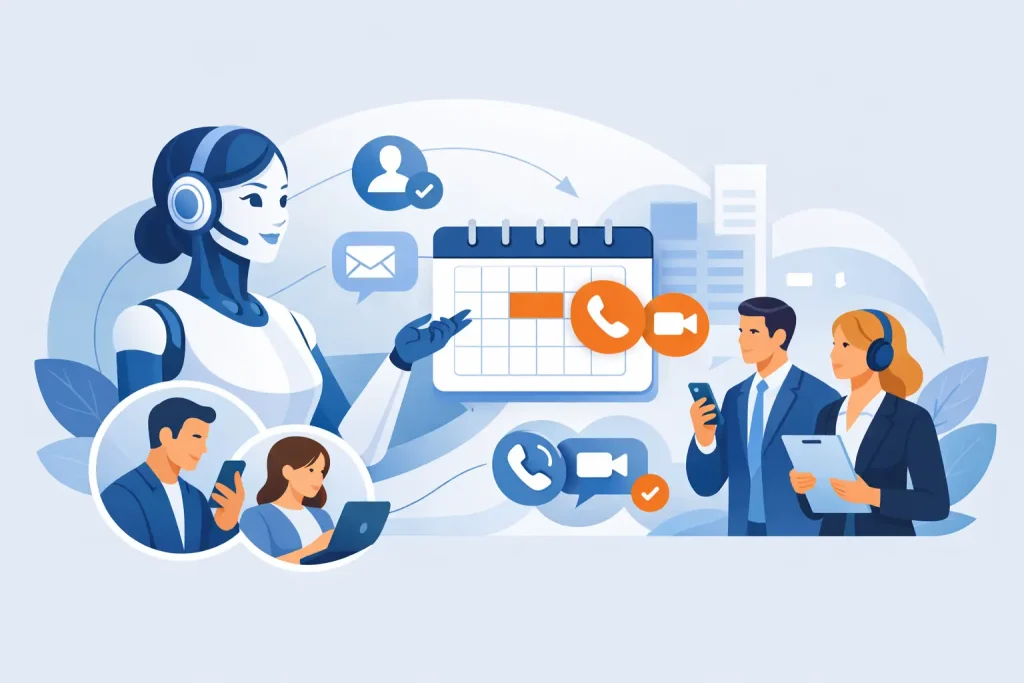
A lead submits a form for a consultation at 8:47 p.m. By the next morning, they have compared three competitors, answered a call from none of them, and moved on. That is not an advertising problem. It is a speed-to-lead problem, and AI sales agents are built to close that gap before valuable intent disappears.
For service businesses, the real value of automation is not sending more messages. It is creating a dependable process that responds, qualifies, follows up, and books the right people onto the calendar without asking an owner or front-desk team to be available every minute of the day.
What AI Sales Agents Actually Do
An AI sales agent is not just a website chatbot with a few canned replies. When it is connected to your funnel, CRM, calendar, and communication channels, it can handle the early sales conversation based on rules you set for your business.
That conversation might begin after a Meta ad lead submits a form, when someone messages your Instagram account, or when a prospect lands on your website after searching for a local service. The agent can acknowledge the inquiry immediately, ask relevant qualifying questions, answer common objections, and guide the prospect toward a consultation or appointment.
For a med spa, that could mean asking which treatment the person is interested in, when they want to come in, and whether they are a new or returning client. For a home service company, it may mean confirming the service area, job type, urgency, and property details. For a B2B consultant, it could identify company size, current challenge, budget range, and decision-maker status before offering a strategy call.
The point is not to make every prospect feel like they are talking to a machine. The point is to make sure every serious prospect gets a useful response while their interest is still high.
Why Fast Follow-Up Changes Revenue
Most businesses do not lose leads because their offer is weak. They lose them in the handoff between marketing and sales. Ads generate inquiries. Landing pages collect contact details. Then the lead sits in an inbox, a spreadsheet, a missed-call log, or an unmonitored CRM stage.
A fast first response signals professionalism and creates momentum. It also gives your business the first opportunity to frame the conversation around the prospect’s problem, rather than letting them continue shopping without direction.
AI sales agents make that response consistent. They do not forget to reply after business hours. They do not skip a lead because the day gets busy. They do not send a vague “just checking in” message three weeks after someone requested information.
That consistency matters even more when you are paying for traffic. Every uncontacted lead raises the effective cost of your ad campaign. Improving follow-up does not just create more bookings from the leads you have. It can make the same advertising budget produce more revenue.
Where AI Sales Agents Fit in a Lead-to-Booked-Call System
An effective agent needs context. Without it, automation becomes fragmented: a form sends one message, a chatbot gives another answer, and a salesperson has no idea what the prospect has already been told.
The strongest setup connects the full journey. Paid ads or organic content create awareness. A conversion-focused landing page captures the inquiry. The CRM records the lead source and intent. The AI agent starts the conversation by SMS, email, web chat, or social messaging. Once the prospect meets the right criteria, the system presents available times and sends them directly to the calendar.
Every interaction should be recorded in the pipeline. That gives the sales team a clear view of where each lead stands: new inquiry, contacted, qualified, booked, no-show, or closed. It also prevents the frustrating experience of a prospect repeating the same details to multiple people.
For high-ticket or sensitive services, the agent should hand off at the right moment. A counseling practice, for example, may use automation to respond quickly, share appropriate next steps, and book an intake call, but it should never position an AI agent as a substitute for clinical care. The same principle applies to complex estimates, legal questions, unusual project scopes, or emotionally charged customer situations.
The Questions That Produce Better Appointments
A booking is not automatically a qualified opportunity. If your calendar fills with people outside your service area, below your minimum spend, or looking for something you do not offer, your team still wastes time.
That is why qualification should reflect your real sales process. The best questions are short, useful, and connected to a decision. Ask only what helps determine fit or route the lead correctly.
For example, a tree planting company may need location, number of trees, property type, and desired timeline. A beauty clinic may need treatment interest, preferred appointment time, and whether the prospect has specific concerns that require a consultation. A business services provider may need the prospect’s role, goal, current setup, and readiness to invest.
The agent should also be able to recognize buying signals. If a lead asks about availability this week, payment options, outcomes, or what happens during the first appointment, the conversation should move toward booking rather than continuing with generic nurturing.
At the same time, qualification must not feel like an interrogation. Long forms and ten-question chat sequences can reduce conversion. It depends on the value and complexity of the offer. A $99 salon appointment needs less screening than a $5,000 consulting engagement. Build the conversation around the minimum information needed to move the right person forward.
AI Sales Agents Need a Clear Voice and Clear Boundaries
Automation only works when it sounds like a natural extension of your business. Your agent should use your actual service names, explain your process accurately, and avoid claims your team cannot support.
This is where generic templates fall short. A local service company may need a practical, direct tone. A wellness brand may need a calmer and more empathetic approach. A B2B agency may need to be concise, commercially focused, and ready to address operational questions.
It also needs boundaries. The agent should know when to answer, when to collect details, and when to escalate. Give it approved answers for common questions about pricing ranges, service areas, availability, preparation, and next steps. Give it clear instructions for situations that need a human response.
Do not let an agent invent policy, promise outcomes, diagnose a condition, or negotiate custom terms without guardrails. The goal is confident communication, not uncontrolled automation.
How to Measure Whether the System Is Working
The easiest mistake is judging AI sales agents by message volume. More conversations do not necessarily mean more revenue. Track the points where lead intent becomes a business outcome.
Start with first-response time, contact rate, qualification rate, booked-call rate, show rate, and close rate. Then compare those numbers by lead source. A Google search lead may convert differently from a Meta lead, and an Instagram message may need a different follow-up sequence than a website form submission.
Also look at the reasons leads do not book. Are they asking for services you do not provide? Are they dropping off after seeing a price range? Are there not enough calendar slots? Are your follow-up messages arriving too often, or not often enough? These are operational insights, not just marketing metrics.
A good system gets better over time. Conversation logs reveal the objections prospects repeat, the questions your landing page failed to answer, and the points where a human closer should step in sooner.
When Automation Helps Most, and When It Does Not
AI agents are especially valuable when lead volume is growing faster than your team can respond, when inquiries arrive outside business hours, or when follow-up depends too heavily on one busy owner. They are also useful when your sales process has repeatable early-stage questions and a clear next step, such as a consultation, estimate request, or service booking.
They are not a replacement for a weak offer, poor targeting, or a sales team that cannot close qualified calls. If your ads attract the wrong audience, automation will simply process more poor-fit leads. If your calendar is unavailable for two weeks, fast follow-up alone will not solve the experience.
That is why implementation matters. The agent, funnel, CRM stages, follow-up sequences, calendar rules, and team handoff process need to work as one system. FZFunnel builds that connection so lead generation does not end at the form submission and your team can focus on the conversations that require real expertise.
The practical question is not whether you should automate every customer interaction. It is which moments currently leak revenue because no one responds quickly enough. Start there, create a useful path to the next step, and let your team spend more time closing the opportunities worth having.