
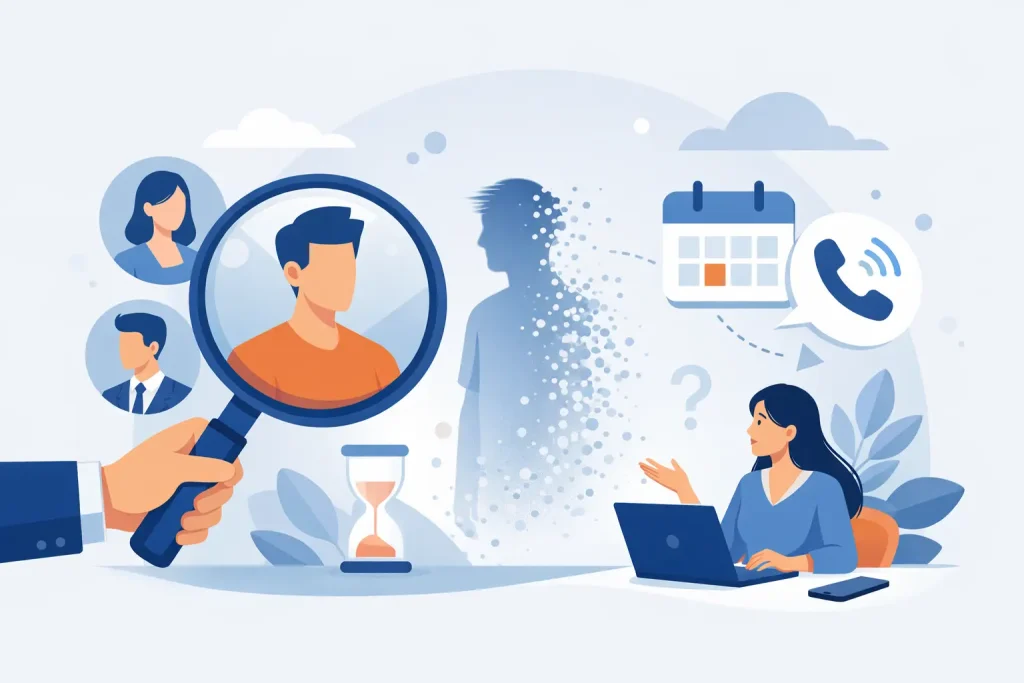
A prospect submits your form at 7:14 p.m., asks about pricing, then goes quiet. The next morning, your team calls once, leaves a voicemail, and marks the lead as “unresponsive.” This is why leads disappear for many service businesses: not because they were never interested, but because the buying momentum had already expired.
For a salon, a home service company, a counseling practice, or a B2B consultant, a new inquiry is not a finished sale. It is a short window of attention. If that window is met with delay, friction, generic messaging, or an unclear next step, the lead does what people naturally do online: they keep searching, compare options, or forget they inquired at all.
The frustrating part is that this loss is often hidden. Ad reports can show plenty of leads. A CRM can look full. Yet calendars remain thin because the process between “form submitted” and “appointment booked” is leaking revenue.
Why Leads Disappear After Raising Their Hand
Leads rarely vanish for one dramatic reason. More often, several small operational gaps make it easier to leave than to continue.
The first response arrives too late
Speed-to-lead matters because intent has a half-life. Someone looking for an emergency tree service, a last-minute facial appointment, or a therapist consultation may contact several businesses within minutes. The business that responds first does not automatically win, but it earns the best chance to start the conversation.
A response the next day can still work for a high-consideration B2B offer or a specialized wellness service. But it needs to acknowledge the inquiry and set a clear expectation. “Thanks for reaching out. We received your request and will call you tomorrow” is better than silence. An immediate SMS or AI-assisted conversation can also answer basic questions while the prospect is still engaged.
The trade-off is personalization. A fully manual response may feel warmer, but it cannot reliably cover evenings, weekends, and busy service hours. Automation should handle the immediate acknowledgment and qualification, then route high-intent conversations to a real person at the right moment.
The lead gets a form, not a path
Many campaigns end with a thank-you page that says, “We’ll be in touch shortly.” That is not a conversion path. It asks the prospect to wait without showing what happens next.
A stronger post-lead experience gives a specific action: book a consultation, choose a service time, reply with a preferred day, or answer two qualifying questions. It also confirms the value they came for. If someone requested a quote for a kitchen remodel, the next message should not sound like a newsletter signup. It should reference the project, explain the next step, and make responding easy.
Every extra step creates drop-off. Requiring a lead to wait for a callback, answer an unfamiliar number, repeat information to a receptionist, and then find a calendar slot adds unnecessary friction. The best systems reduce that sequence without making the experience feel cold or robotic.
Follow-up is inconsistent or stops too soon
One call and one email are not a follow-up system. They are an attempt.
Prospects miss messages for ordinary reasons: they are at work, driving, handling children, comparing providers, or simply not ready to decide that day. Silence is not always rejection. A thoughtful sequence across SMS, email, and phone creates additional opportunities to reconnect without relying on a salesperson to remember every task.
This does not mean sending daily pressure messages. The right cadence depends on the offer. A home services lead with an urgent repair need may require rapid contact over the first 24 to 48 hours. A prospect considering EMDR therapy or executive consulting needs a calmer, more trust-building approach. The principle is the same: follow up consistently, make each message useful, and stop when the person opts out or clearly declines.
Sales and marketing are working from different information
A campaign may promise a free consultation, but the sales team receives only a name and phone number. A lead may tell the chatbot they want a premium package, but that context never reaches the person making the call. These handoff failures force prospects to repeat themselves, which weakens trust fast.
Your CRM should hold the conversation history, source, service interest, qualification answers, appointment status, and next action. That gives the sales team context before they call and lets management see where leads are actually stalling.
Without a connected pipeline, businesses tend to blame lead quality. Sometimes lead quality is the issue. But before increasing ad spend or changing audiences, check whether qualified people are sitting in a “new lead” stage with no owner, no task, and no follow-up plan.
The Quiet Leaks That Make Good Leads Look Bad
A lead can be real, relevant, and ready to buy later while still looking weak in a disconnected process. Four signs usually point to a system problem rather than a pure traffic problem:
- Leads reply to the first message but never receive a meaningful response.
- Booked appointments produce frequent no-shows because reminders and pre-call expectations are missing.
- Salespeople use personal phones, spreadsheets, or inboxes outside the CRM.
- The business cannot say how long it takes to contact a new lead or how many attempts are made.
These are not minor admin issues. They directly affect cost per booked call, show rate, close rate, and the return you get from every advertising dollar.
No-shows deserve special attention. A booking is progress, not revenue. People forget appointments, worry they will be pressured, or fail to understand what the call will cover. Confirmation messages, calendar invites, SMS reminders, and a concise pre-call message can improve attendance. For higher-ticket offers, a short intake form or video explanation can also increase commitment, as long as it does not become another barrier.
Fix the System Before You Buy More Traffic
The right fix starts with visibility. Map the journey from ad click or referral through booked call and sale. Measure lead source, time to first response, contact rate, booking rate, show rate, and close rate. If one metric is weak, investigate the exact step rather than rebuilding everything at once.
For example, low contact rates may point to slow responses, invalid phone numbers, or messages sent from an unfamiliar number. A strong contact rate but weak booking rate may mean the offer is unclear, the sales script is weak, or there is no convenient calendar availability. A healthy booking rate with poor show rates usually signals reminder, qualification, or expectation-setting issues.
Then build a response process that works when your team is busy. A practical lead-to-booked-call system usually includes instant confirmation, automatic lead routing, conversational SMS or email follow-up, qualification questions, calendar access, reminders, and a pipeline that triggers the correct next step. AI agents can help handle first responses and common questions at scale, but they need clear guardrails, accurate business information, and human escalation for sensitive or complex conversations.
For counseling, healthcare-adjacent, and other sensitive services, be especially careful about privacy, consent, and the information collected by text. Automation should make access easier, not turn a personal care decision into an aggressive sales sequence.
Make Every Lead Feel Accounted For
The goal is not to chase every person indefinitely. It is to make sure no interested prospect is lost because your business was slow, disorganized, or difficult to reach.
When acquisition, landing pages, CRM workflows, AI-assisted conversations, and appointment booking operate as one connected system, your team spends less time hunting for context and more time having qualified sales conversations. That is the difference between generating leads and building a dependable revenue process.
Start with the last ten leads that did not book. Read the messages, check response times, and identify where each conversation stopped. The pattern you find there is often more valuable than another month of traffic.